

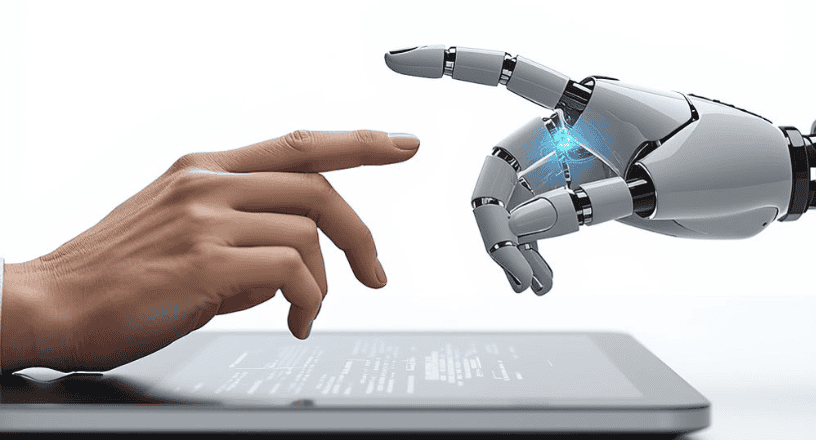
Can AI Make Recruitment More Human?
A few years ago, we used to receive about 200 applications per day through our website. On average, 200 candidates applied every day, and we had to screen them because we wanted to be different. Because candidates applying for a job are humans. They are looking for better opportunities in life. Though I have no doubt that many of these applications were submitted through robotic systems, still, they are humans. Hence, almost every candidate who applied for a job received a reply (I’d say about 98%).
For those candidates who did not meet our criteria, they were told we could not move forward with the application. Those meeting our criteria but missing information, we sent them a message asking for the missing information. And those who provided all the required information received an invitation for an informal and confidential chat to learn more about their personal and professional requirements.
We did not want any candidate who applied for a job and shared a CV to sit and wait. Recruitment is a relationship. Everybody wants closure in any relationship, one way or another. People need to move on with their lives.
We made a few changes to stop the robotic applications and, since we introduced Elizah, our AI Recruitment Assistant at IHR, we are seeing something quite interesting. On a normal day, between 25 and 45 healthcare professionals communicate with Elizah. On weekends, we have seen this go as high as 85 candidates in one day.
But out of all these candidates, usually only 2 to 6 meet the specific criteria for the jobs and hospitals we represent. Pretty much the same number of candidates we worked with when we received all 200 applications per day.
The idea is, if you don’t meet the criteria for the job you are applying for, isn’t it better to know now? Why wait for two or three weeks, keep checking your email and wonder if somebody will contact you? You get an answer, “there and then.” You know where you stand. You can move on and look for another opportunity Sometimes the answer is not so clear.
We see CVs every day where important information is simply missing. A physician may have the right specialist qualification, but we cannot see clearly how or where the specialist training was completed. Dates may be missing. Registration may not be mentioned. There could be something important that the candidate simply did not think to put on the CV. And this is when a Digital Recruitment Assistant, like Elizah, can make a huge improvement to the process. Elizah can ask the right questions to complete the profile.
Elizah can ask about specialist training, board certification, registration or whatever information is missing. The candidate gets the chance to complete the information before the application is reviewed by a recruiter. And sometimes, even after asking the questions, the answer is still not clear.
Healthcare qualifications can be complicated. We see physicians who trained in different countries or followed a different route to specialist recognition. We cannot expect AI to know the answer to every situation. So, when Elizah is not sure, she does not guess. The case needs to come to one of us to look at it.
And, for me, this is how AI should be used in recruitment. I don’t see it replacing the recruiter, at least not any time soon. I see it helping us deal with candidates better and faster.
If you meet our criteria, we move forward. If information is missing, we ask you for it. If your case needs somebody to look at it, we do that. And if you don’t meet the criteria for the jobs we are recruiting for, we tell you. We tell you the reason and we suggest alternatives.
At least you have an answer. You may not like it, but I know you will respect it. I do think every candidate deserves that. This is how AI can make healthcare recruitment more ethical, more human and more humane.